


STANDARD & PUSH
- Apr 12, 2016
- 12 min read
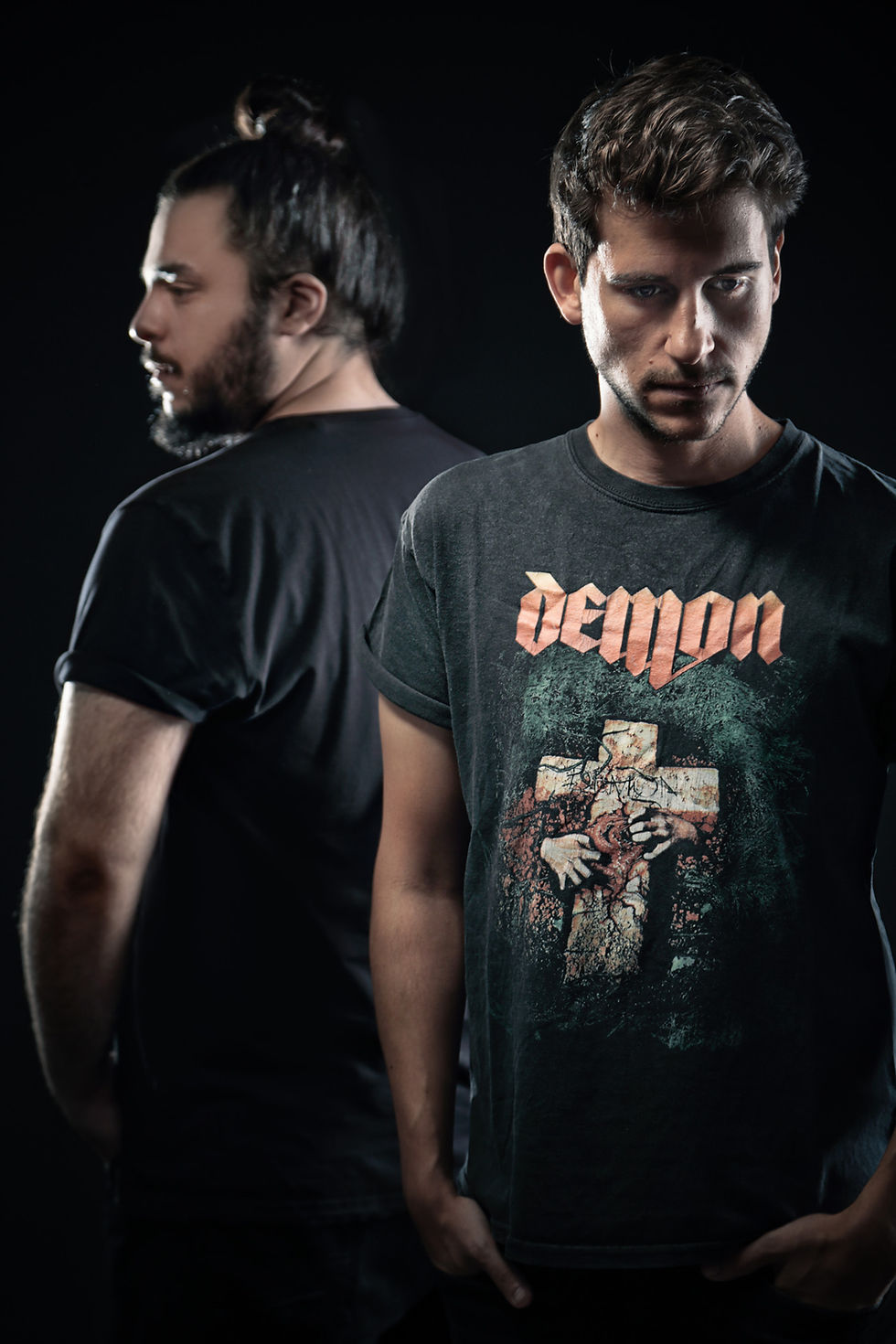
London Jam had the opportunity to speak with one half of the Base-House DJ duo Standard & Push (aka Konstantine Pope and Jason Filos) this week and get a real insight into the electronic music world. Both Jason and Konstantine have strong musical backgrounds, Jason has Doctorate in Acoustics & Signal Processing, along side Konstantine with a Masters in Composition for Screen from the Royal College of Music. It is safe to say they are both highly qualified to make the incredible music they are doing. Having been signed to Circus records (a dream label!) they have an EP in the mix, along with most recently playing Ministry of Sound, it is safe to say Standard & Push are ones to watch!
How did you both start working together?
KONSTANTINE: About five years ago I moved into a block of flats and then one day, as I’m walking out of my place, I hear this guy calling me in Greek saying ‘Hey what’s up!?’ Turns out he was living in the flat next door! We had a bit of a chat and didn’t think much of it really. The next day he slides a CD under my door - an actual CD. It had ‘that’s my music check it out’ written on it with a sharpie, so I put it on, and there were some pretty cool tunes on there. So I went next door and we started working on tracks together. That’s basically how this came about. The craziest thing though is that some time later we realised that we had actually met years before already. In 2006 I had a gig in London with one of my bands and I crashed at a flat he was sharing with one of my mates. One day whilst we were working on music, Jason turned to me and said ‘You know, I once met a Konstantine a few years ago, he used to play drums with this band’, and I realised, no that’s actually me!
So we started writing tracks for fun, then about a year later we began releasing tracks in a rather niche genre called ‘Glitch-Hop’. We got an award for best remix in 2012, and charted on Beatport a couple of times. We then stopped writing tracks completely for about a year, because Jason was looking for a job, I just got a new job and we just weren’t feeling like writing that kind of music anymore. Then, just before I left for a summer holiday, we decided to write one last track, for fun, and just really go for it. We said forget everything we will just write whatever comes out, not ever intending to release it or go anywhere with it. It turned out to be one of the tracks that got us signed to Circus Records and put the band properly into gear again.
What made you decide to go down the electronic music route?
K: I grew up playing drums in various Heavy Metal bands and the more albums I would record the more I realised I was really interested in producing and mixing. With my main band in Greece we had gotten into the habit of pre-production for most of the tracks and I progressively found myself enjoying putting the tracks together inside the computer more than actually recording the album. So when I moved to London I didn’t know that many people to put a band together so I started writing tunes in Logic and it all moved on from there.
Despite my Heavy Metal background, I always liked electronic music a lot and when Dubstep came out there was at last a music genre where I could combine my love for heavy music, electronic sounds and music production. The moment I heard my first Dubstep track, which was Bar 9’s ‘Piano Tune’ I think, I thought ‘oh my god I HAVE to get into this!’ It happened very slowly, I just started trying things out on my own and learning through loads of trial and error, never sharing any of these tracks with anyone. Eventually, producing and mixing tracks became one of the things I loved most about music. This is what Standard&Push was at the beginning for me and Jason, it was almost like a school. It was where we would go and try to do the most challenging things we could come up with and learn through that. And in many ways it still is like that, it’s the place where we go and say, right, now we are going to do something that is 100% of our abilities. We still get very suspicious when a track comes along too easily.
Is there a certain way you would describe your music?
K: In our heads Standard&Push is two different bands sharing the same name. There is the band that used to do Dubstep and Glitch-Hop when we started out and then band that came into being after our long break. If you have to put a label on our current sound I guess you could say we are doing Bass House. But we were not aware of the genre at all when we started writing those tracks and it definitely wasn’t as popular as it is now. What we tried to do was to combine our love of house music with our love for really heavy sound design so we ended up combining Dubstep and DnB sounds with a house groove. As things moved along we discovered other artists doing similar things and it progressively became a genre and a scene which is actually growing in popularity very rapidly. If we had to be very specific you could say that we are actually doing more Neuro House (not sure if that is even a thing) cause most of our sounds come from the more techy or ‘Neurofunk’ side of DnB rather than Dubstep. But at the end of the day we are just writing really heavy house music!
Do you think the EDM genre is changing or is it fairly set in style?
K: As far as we are concerned, it is debatable if EDM is a genre per se; it’s like saying Heavy Metal is a genre. Heavy Metal is a blanket. EDM these days… it’s exactly like metal, you have Iron Maiden and then a Death Metal band, they sound completely different and they don’t have the same fans, EDM is a bit like that. Yet for quite a few people the term EDM is directly linked to the big room/festival house music that has become extremely popular over the past few years.

If this is what you are referring to when
you say EDM, it is definitely changing, and, funnily enough, lately it is coming closer and closer to the music that we make. We always thought ourselves that we belong in the ‘bass’ scene and then we realised mainstream names such as Afrojack and Chuckie played us on their radio shows in Holland, and we thought ‘what, how!?’ I mean even Tiesto has played one of our tracks which would not have made any sense a few years back. But if you look at what Tiesto is putting out this past year, it’s not too different to what we are doing, but slightly, only slightly, more commercial.
Change is very central to EDM whether you are using it as a blanket term or referring to a specific genre. In retrospect this is one of the main reasons why I moved from writing Rock to producing electronic music. I found there was a point where Rock started looking back and stopped evolving. When Nirvana came out there was nothing like it, it was a brand new thing, there was nothing to compare them too. It has been a long time since something similar happened in rock. With electronic music it is the opposite, the evolution, inventing something new, is at the very essence of what you are doing, the word fresh goes around a lot, if your writing is not ‘fresh’, it is a big issue. So it is evolving and evolving very fast and that is one of the most attractive things for me, with electronic music.
You are Greek and your partner Jason is from Germany, have you played in either country yet?
K: Jason gets a bit upset when he is called German! He has a German passport but he is Greek and speaks it as good as I do, his whole family is Greek. We haven’t played Germany yet, our very first gig was in Greece actually, and it looks like we are going back there for a gig soon. Hopefully Germany will follow too!
What is the music industry and scene for this kind of music like in Greece compared to London?
K: I have been in London for more than 8 years now so my experience with the music scene in Greece in general is not exactly first-hand. I follow what’s happening there mostly through Facebook and through word from my mates there. As far as I can tell, I haven’t seen a night billed as a Bass House night yet, I think I found one artist who released a Bass House track and it was a pretty good one, but I haven’t found a proper night or anything resembling a scene yet. There is a lot of DnB, Dubstep and Trap going on though so I am sure Bass House will follow soon. Greece used to be behind, we used to say it was a 10 year line, whatever is big in the world it would take 10 years to come to Greece. Now obviously we have social media, the digital revolution, etc. things move a lot faster now. Still though, it must have been something like a year after I started listening to Trap, that I saw these kind of parties going down in Greece.
In terms of labels I am not aware of any big labels in Greece releasing our kind of music. If there are it would be really interesting to find them, because it would be great to support them or remix one of their artists. I think Greece has many really good bass artists, such as Disphonia, D-Jahsta, Cubism, but I think most of them release with European or US-based labels. Parties are big in Greece, just not labels, weird!
Do you have anywhere you want to play that would be the pinnacle of your career?
K: I would love to play the Ultra Music Stage in Miami, but who wouldn’t! Any place, playing Glastonbury, main stage at any of the big festivals! Ministry of Sound was really high on the wish-list but we played there a couple of weeks back, so we can tick that off the list! We are very grateful for that one, we totally didn’t think we would be playing Ministry this year. But it happened. And that’s all down to the amazing guys at Circus who put it together.
In reality though, neither me nor Jason think like that, we tend to approach things in a bit more abstract way rather than set specific goals. For us there are two main goals that are constantly up there when it comes to Standard&Push: maximise the audience and maximise our skills. Of course playing the biggest festivals is the ultimate dream but this cannot happen at the expense of us writing the music that we like, becoming better producers and challenging ourselves. Maintaining this really fine balance is the only goal we actually have, we never go more specific than that and we check ourselves against it constantly.
So for us as long as this thing keeps progressing in terms of career and skills we are all good. If we fell into a path that is super profitable but was stagnant skill wise, just finding a line and repeating it, then the whole band would fall apart within 6 months and we would be done with it. We don’t really think like we have to get anywhere, I just know there is an imaginary line in our heads, that we have to follow, and we are pretty strict about it.
You were recently signed to Circus Records how did that come about?
K: We have been working with Circus since May last year. Our management decided to send them a couple of our tracks and they invited us over to their offices straight away. The vibes were really good and it wasn’t long before it was clear that this was the best home for our music so we started working with them by remixing Flux Pavilion’s first single from his latest album. We did not physically sign the contracts with them until December 2015 and the release of ‘We Freaky’ - which was our first original mix released by Circus - but this was down to Red Tape as we have been working with them constantly for the past year. At the moment we are putting together our first EP for the label, which is getting there. We got a whole load of tracks we want to put on there, we are not entirely sure we got all of them to the best of their potential but we know what the EP is going to sound like. And it’s going to be very heavy, too heavy maybe!
Being a composer do you find writing this style of music more free as opposed to a set brief?
K: Freedom in music is very relative. When I write a track I think about what I want to write and what feels amazing to write about, but I also have to think about who is going to listen to it, not in a bad way, not in a sell out way, but music is communication, if you don’t think about an imaginary listener then for me it is not music, you are doing something else. The main difference is that when I am writing for films, I have to serve someone else’s vision, be it the director or a client if it is a commercial. And for some people this can be quite restricting but for me I find it quite often very liberating because a big portion of the creative responsibilities is taken off my shoulders. When I am writing for S&P it is just mine and Jason’s vision that I have to worry about but does that make the process more free? It is a hell of a lot more responsibility there.

Has your work as a composer influenced your work for Standard & Push?
K: Yes and sometimes the other way around. My career as a film composer started around the same time as Standard&Push came about so they have both been evolving side by side. I’m not even sure I can separate them in my head because they inform each other in so many different ways. Quite a few of the techniques I am using to do the tracks I do for audiomachine for example come straight out of the Standard&Push bag and visa versa a big portion of the skills needed to put together a S&P track I have developed while working on screen projects.
A lot of my clients have come to me because they heard a Standard&Push track and a lot of the connections that helped S&P get off the ground where made though my work as a film composer.
Do you have a similar music style to Jason, do you ever argue?
K: To start with, we both got into Heavy Metal at a very young age. Our musical tastes overlap in some areas, but they are very different in others. Jason is massively into Drum’n’Bass for example, it is one of his favourite things in the world. I am not that into it, I like it a lot but I am definitely not a hardcore fan. I think I have some other musical sensibilities, especially in the pop direction, that Jason doesn’t share. When it comes to the music that we write and the genres it falls in, our tastes are very close though, there hasn’t been a single time when I will fire a track I found on YouTube over to Jason saying “Dude you GOTTA check this out” and he would say “nah it’s rubbish”.
That said we do tend to argue quite a bit when we are putting tracks together but that’s the whole point of collaborating with someone. It’s all about how the other person’s views and taste inform and combine with yours and there is friction there but it is the kind of friction that always takes the music to the next level. If either of us wanted to work with someone who agrees with them all the time we would just be working solo!
Is there anyone you would be interested in working and collaborating with?
K: There are so many! Obviously I am a massive fan of everyone at Circus. Any of these people - and hopefully it will happen soon - I would love to work with, mainly because they are my heroes! We largely got into Dubstep because of Flux Pavilion and we love Cookie Monsta and Funtcase. In terms of Bass House, we would really like to collab with Habstrakt for example. Jauz is a legend too, he is one of the guys who started the sound.
Do you have any big plans for the rest of 2016?
K: At the moment, there are things in the works, but nothing I can actually reveal. Our main focus right now is to nail that first EP. People are waiting, gigs are being put together and things will be announced soon, but for me and Jason we can not see beyond the moment when all the tracks are where we want them to be and sent off for mastering. We have become a bit obsessed, everything else is a distraction. Our sound is in the best shape it’s ever been, we have the most amazing people around us and we are signed to a label that we have been massive fans of since the beginning of the band and who share our vision 100%. So until the EP reaches a level that reflects all that, there is very little else we care about!
Media:
http://standardandpush.com
https://www.facebook.com/StandardPush/
http://soundcloud.com/standard-and-push
Comments